

Have you heard these facts about Lapinlahti yet?

Did you know that Lapinlahti is as old as your great-great-great-great-grandmother?
The psychiatric hospital was founded in Lapinniemi 185 years ago, making it one of the first of its kind in Europe.
For seven generations now, Lapinlahti has been known as a place where mental illnesses have been treated and mental wellbeing supported using progressive methods. Right from the start, it was understood just how important the environment and nature are for recovery. Today, the focus of our work is on the prevention of mental health problems and building resilience through various forms of social gatherings and shared activities.
Lapinlahti’s intangible cultural heritage of mental health work thus continues to thrive every day. If the majority of the premises were to be used as a head office, the area’s 185-year-old cultural heritage of mental health work would be lost.
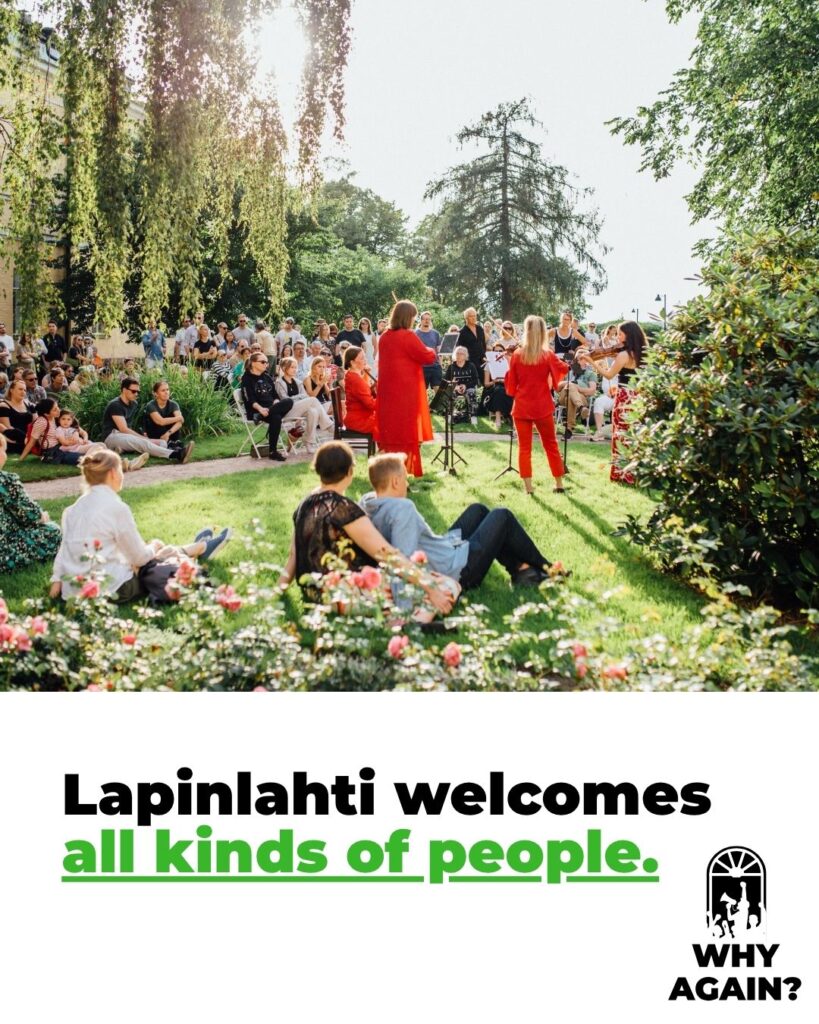
Did you know that people from many different walks of life visit Lapinlahti?
They include pensioners, daycare groups, corporate teams, sauna-goers, researchers, people recovering from substance abuse and mental health issues, community gardeners, musicians, entrepreneurs, conference organisers, people who have moved to Finland, university and applied science students, people belonging to gender minorities, long-term unemployed people, audiobook voice actors, people on the autism spectrum, relatives organising memorial services and naming ceremonies, young people with special needs, psychotherapy clients, people on parental leave, and ordinary Helsinki residents looking for meaningful ways to spend their free time.
Together, we have created an atmosphere where everyone can be themselves. People in different life situations and from different backgrounds can meet and learn from one another. The diversity amongst visitors is both a source of human richness and an important prerequisite for, for example, economically sustainable entrepreneurship and a culture of innovative experimentation. It is hard to see how the area could be described, in the words of a National Coalition Party politician, merely as a ‘hangout for hippies’.
Did you know that Lapinlahti receives 150,000* visits every year?
In its leader on 2 September, Hufvudstadsbladet incorrectly reported that the number of visitors was 50,000 per year. It also compared this figure to the 500,000 visitors to Seurasaari and the 1 million visitors to Suomenlinna.
The comparison is flawed, as both sites have a long history as tourist attractions; Seurasaari Folk Park was established in 1889, whilst Suomenlinna opened to visitors in 1948 and was designated a UNESCO World Heritage Site in 1991. The Seurasaari Open-Air Museum is part of the National Museum of Finland, whilst tourist information for Suomenlinna is provided by the Suomenlinna Management Board, which operates under the Finnish Heritage Agency.
Thanks to the efforts of civil society actors, Lapinlahti has grown into an interesting urban destination in just 12 years. The pace of growth has been rapid, and the area has the potential to become a meeting place for even more Helsinki residents if these activities are allowed to continue.
*excluding visits to the park
Did you know that the City of Helsinki has gathered residents’ opinions on the plans for the buildings in Lapinlahti three times?
In the KerroKantasi surveys, residents were able to freely express their opinions rather than simply answering “yes” or “no.”
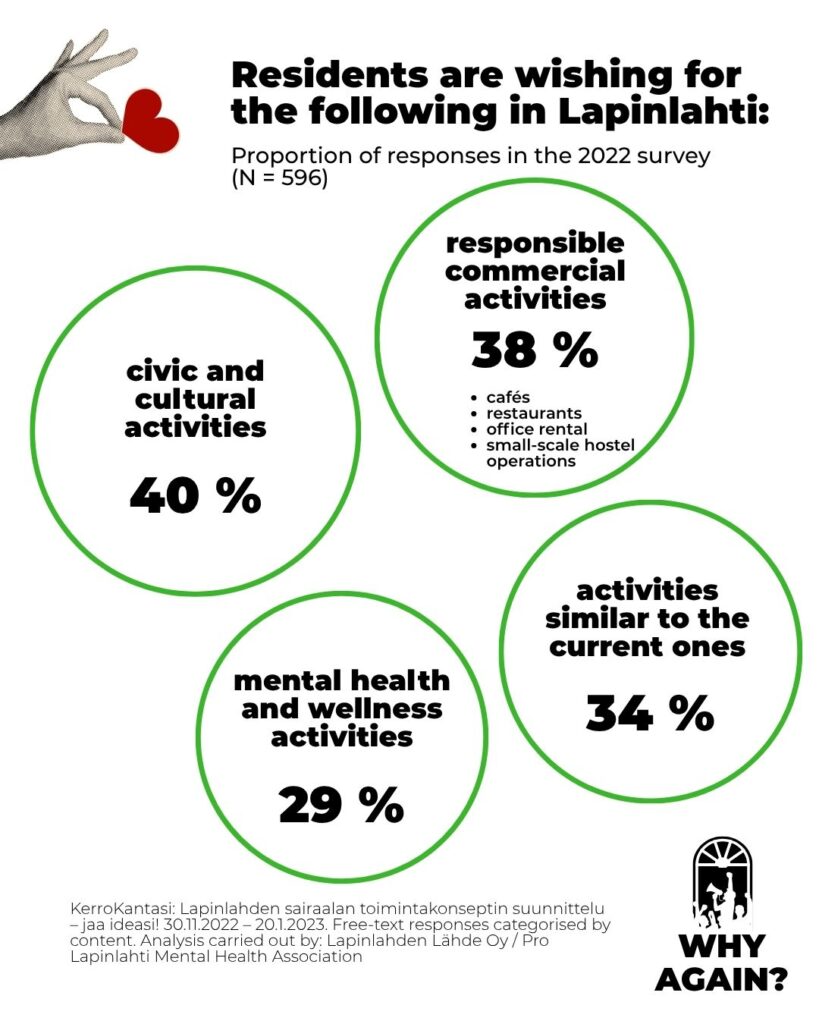
We analyzed the responses to the 2022 survey. The most frequently expressed wishes were for civic and cultural activities (40% of responses), responsible commercial activities such as cafes, restaurants, office rentals, and hostel lodging (38%), and mental health and wellness services (29%). Activities similar to the current ones received support in one-third of the responses (34%) and opposition in 6% of the responses.
Human values, such as an accepting atmosphere and consideration for people in vulnerable situations, were highlighted in four out of ten responses (42%).
Only a few responses (0.01%) expressed a desire for ownership of the area to be transferred to a for-profit company.
Why does the city’s preliminary plan not give greater weight to these results? What does this mean for Helsinki residents’ broader opportunities to influence decision-making in this city? Why is the City of Helsinki prepared to undermine its residents’ trust in the decision-making process through its actions?
According to Section 22 of the Local Government Act, the opportunities for participation offered to residents must be impactful. A mere pretense of consultation is therefore not enough. City residents must also be listened to.
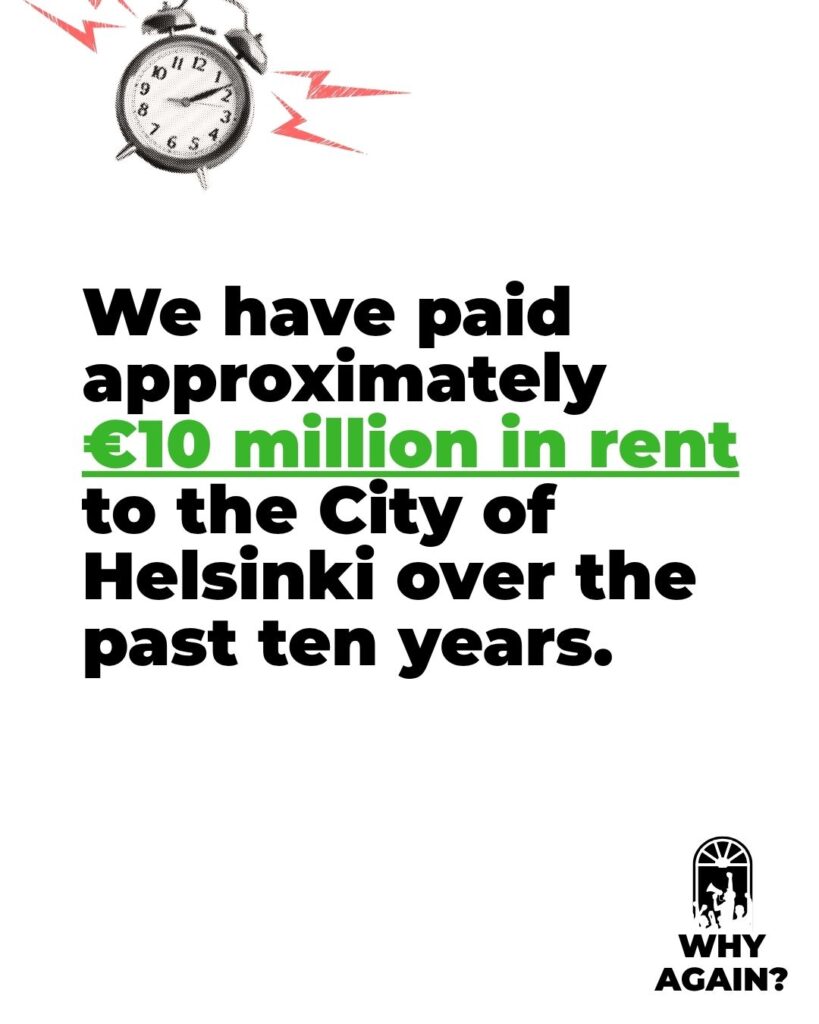
Did you know that the current operators at Lapinlahti have paid the City of Helsinki around 10 million euros in rent over the last ten years?
At the same time, between 2016 and 2023, the City of Helsinki provided around 4.4 million euros in support for the premises, infrastructure and rent costs of the Maria 01 start-up campus. Startup Maria Oy has also received around 1.8 million euros from the city’s innovation fund between 2018 and 2024. The city has justified this support on the grounds of job creation, high-growth companies and the city’s vitality. We think it’s great that the development of new ideas is being encouraged and that the city is investing in Maria.
When it comes to Lapinlahti, the discussion often sounds quite different. There is talk of low rents and city support for a small group of operators, even though the rent level should be compared with comparable listed, unrenovated premises. Social innovations and a culture of experimentation are not encouraged in the same way, as the benefits they provide are not easily quantifiable in monetary terms.
However, the operators in Lapinlahti have paid around 10 million euros in rent and kept the premises vibrant and functional. The diversity of the area has fuelled innovation, and a large number of small businesses have operated there.
At the same time, Lapinlahti has generated social value that cannot be measured solely in terms of jobs or the number of businesses:
- mental well-being
- free access to culture, arts and events
- a sense of community and inclusion fostered by urban spaces open to all
- support for returning to working life
- workspaces for organisations in the well-being and cultural sectors
- the continuity of cultural heritage
- a centre of urban culture that enjoys international recognition
The City of Helsinki recognises the value created by the Maria 01 community. The value generated by Lapinlahti also deserves to be recognised.
Both are valuable to the city.
Now you know!
Please share this information with your friends. Thank you for standing up for Lapinlahti! <3
Add your first comment to this post